Winter car rental in Prague: what the law wants and what is on the car
Winter tyres in the Czech Republic are not a recommendation. From 1 November to 31 March, if there is continuous snow, ice or frost on the road, they are a legal requirement, and a single blue road sign can make them compulsory regardless of the date or the weather.
Most visitors find this out at the rental counter, where winter tyres appear as a paid add-on. At CarLove they are fitted for the whole of that window at no extra charge, along with the motorway vignette. This page covers what the rules actually say, where the winter roads are worth driving, and how to handle them.0 €
charge for winter tyres
1 Nov
to 31 March, fitted as standard
4 mm
minimum tread the law requires
2 yrs
oldest car in the fleet
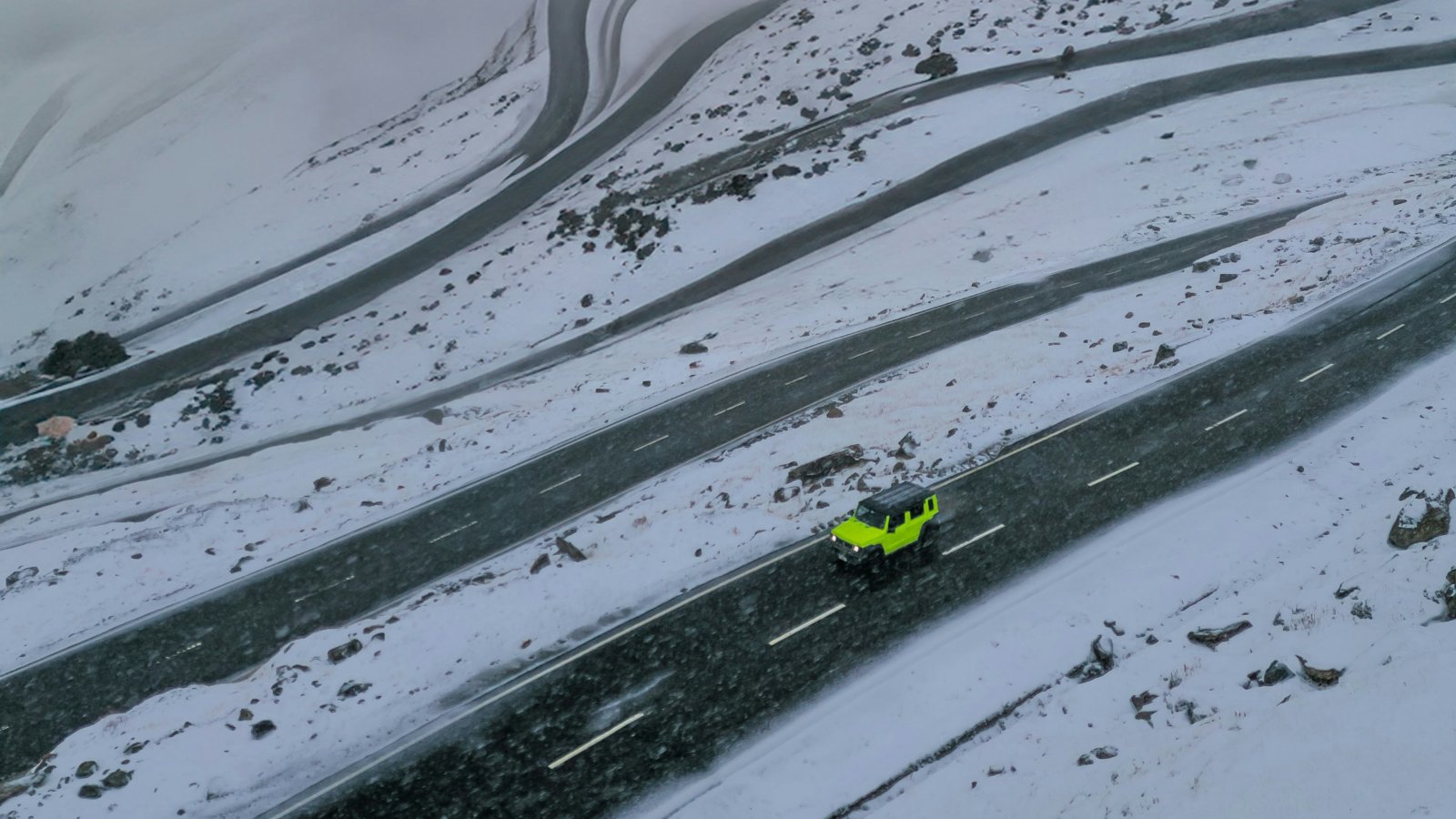
What Czech law actually says
Section 40a of the Czech Act on Road Traffic sets the rule, and it is conditional rather than absolute. Between 1 November and 31 March you must be on winter tyres when the road is covered by continuous snow, ice or frost, or when that can reasonably be expected. On a clear, dry December day the requirement does not bite. Two details matter more than the date range.The C15a sign overrides everything
A blue circular sign showing a car and a snowflake makes winter tyres compulsory on that stretch of road whatever the date and whatever the weather. It appears on mountain approaches and passes.
Tread depth is part of the law
At least 4 mm for vehicles under 3.5 tonnes, and the tyre must carry an M+S, M/S or MPT marking. A worn winter tyre is not a legal winter tyre.
And then there is liability
Beyond the fine, driving on summer tyres in winter conditions weakens your position badly if there is an accident. That is usually the more expensive consequence.
What this means for a rental: every CarLove car runs on compliant winter tyres from 1 November to 31 March. You do not choose it, pay for it or check it. The legal side is handled before the keys reach you.
Crossing into Austria and Germany
The Czech rule stops at the border, and the neighbours are stricter in different ways. Austria requires winter tyres on snowy or icy roads between 1 November and 15 April, and Germany has no fixed dates at all: if there is snow, ice or slush, the tyres must be suitable, and since October 2024 that means the Alpine snowflake symbol, not M+S alone. Since the tyres are already fitted from November, a trip to Vienna, Salzburg or Dresden is covered on that front. Rules do change, so check the current position for each country before a first winter drive abroad, and remember that vignettes and tolls are separate: the toll roads in Europe guide covers who charges what, and speed limits in Europe is worth two minutes.No cross border surcharge
Taking the car to Austria, Germany, Poland or Slovakia costs nothing extra at CarLove, which is not the norm in this market. Tell us before you go, and buy the local vignette for each country you drive through.
Where to drive in winter
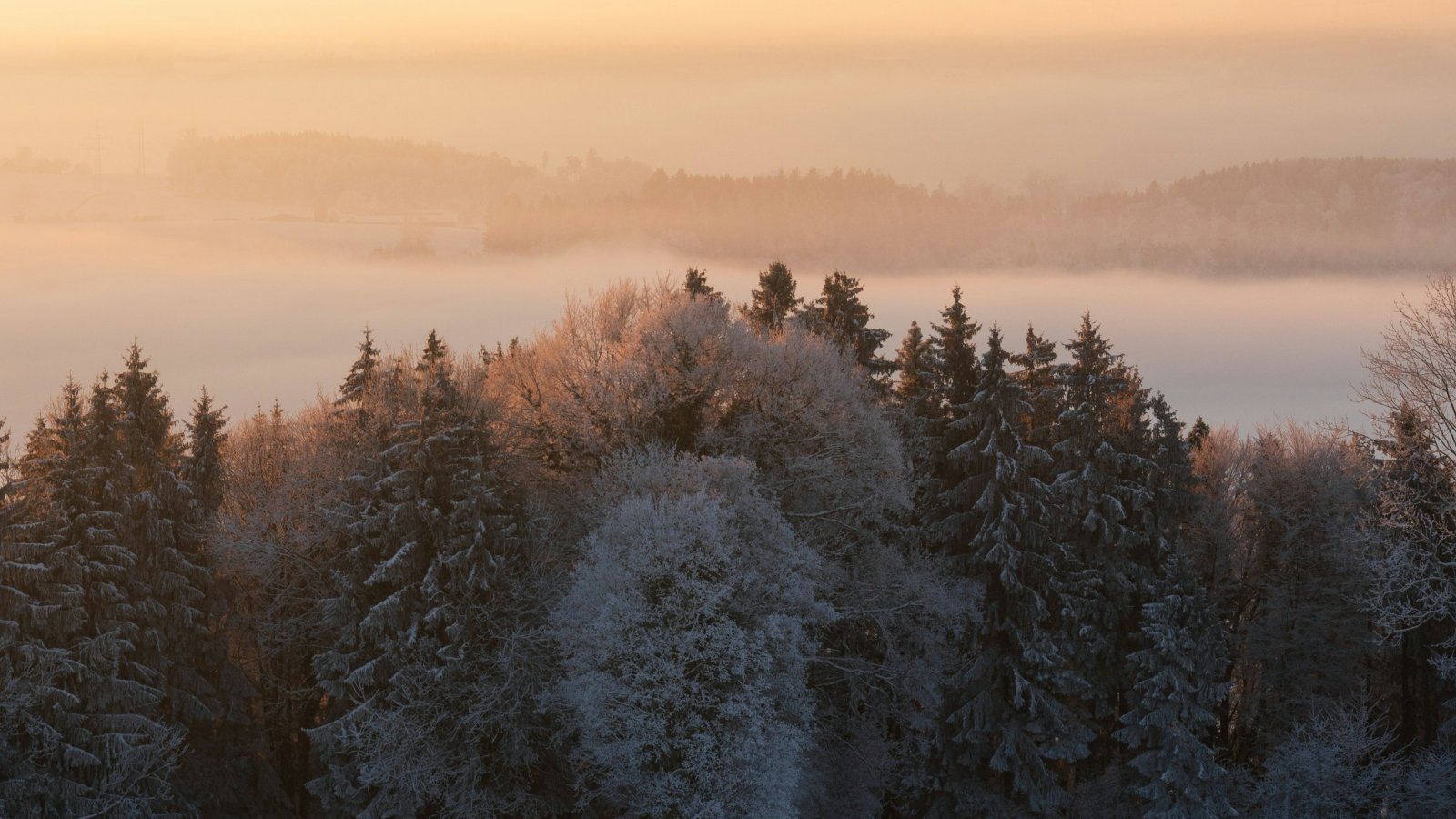
Krkonoše
The main ski region, northeast of Prague
Špindlerův Mlýn, Pec pod Sněžkou and Harrachov are the three names to know. The full route is in our Prague to Krkonoše guide.
Šumava
Cross country skiing and quiet, south west
A vast national park along the German border, and one of the emptiest parts of Bohemia in winter. Better for Nordic skiing and walking than for downhill.
Jeseníky
Moravia’s mountains, further east
A longer drive than Krkonoše and correspondingly less crowded. Praděd is the headline destination.
Christmas markets
Late November through December
Dresden’s Striezelmarkt is one of the oldest in the world and an easy run north on the D8, covered in our Prague to Dresden guide. Vienna is the other obvious one.
Six things that make winter driving here easier
1
Add half again to mountain journey times.
Winter tyres shorten stopping distances but do not abolish physics. A route that takes two hours in June can take three in snow, and planning for it removes the temptation to hurry.
2
Fill the tank before the last climb.
Petrol stations thin out on the approaches to Šumava and Krkonoše, and some close early in winter. Fill up in the last proper town rather than the last village.
3
Clear the whole car, not a porthole in the windscreen.
Driving with snow on the roof and obscured lights can bring a fine in the Czech Republic, and the roof load slides onto your own windscreen under braking. The scraper is in the car.
4
Watch for the C15a sign on mountain roads.
Blue circle, car, snowflake. Where it appears, winter tyres are compulsory regardless of conditions. You will be compliant in a CarLove car, but it is worth recognising the sign.
5
Keep well back from the gritting lorry.
Grit thrown from a spreader chips windscreens, and following one closely on a motorway is the most reliable way to collect a crack. Hang back or overtake decisively.
6
In Prague, the tram tracks are the ice.
Steel rails and wet cobbles freeze before asphalt does and offer almost no grip. Cross them as squarely as you can and avoid braking or turning while you are on them.
Which car for winter
Everything in the fleet runs on winter tyres in season, so the choice is about the destination rather than the weather.City and short trips
Easier to park, easier on wet cobbles
Hyundai i20 AT
Škoda Kamiq
Hyundai i30 ATFOR THE MOUNTAINS
Ground clearance and traction
Unploughed resort roads and steep approaches
Dacia Duster AT 4×4
Hyundai Tucson
Volvo XC60
Škoda KodiaqSkis, boards and boots
When the luggage is the problem, not the road
Škoda Superb Combi
Renault Espace 7
VW Caravelle 9Why insurance matters more in winter
Winter does not usually produce dramatic accidents. It produces small, expensive ones, and they cluster around exactly the items that separate the insurance levels.What actually happens in winter
Grit chips the windscreen on the motorway
A wheel finds a kerb hidden under snow
A car slides gently into a bollard while parking
A door is caught by wind in an icy car park
Which level covers it
Glass: SILVER and GOLD
Wheels and tyres: GOLD only
Bodywork: SILVER and GOLD
On BASIC all of it runs through the excess
What comes with the car
✓
Winter tyres, 1 Nov to 31 Mar
Alpine snowflake marking, compliant with Czech law, no charge
✓
Czech motorway vignette
Included all year, motorways from the first kilometre
✓
Child seats
Free of charge, on request
✓
Delivery when you need it
Optional extra, available in Prague and at the airport, 24/7
Frequently asked questions
Winter tyres already on, vignette already paid
200+ cars from 19 euros a day, none older than two years, with delivery available in Prague and at the airport.
See cars and prices