Prague to Vienna Road Trip: Route, Vignette and Imperial Palaces
Vienna is roughly 340 kilometres from Prague by the usual route through Brno and Mikulov. Allow about four hours without long stops before the Habsburg imperial world opens up: Schönbrunn Palace, the Ringstrasse, the Kunsthistorisches Museum, and the Belvedere with Klimt's The Kiss on the wall. Most Prague visitors never make it. Those who do tend to come back.
Driving to Vienna from Prague makes genuine sense. Trains are frequent but inflexible, flights are absurd for this distance, and a rental car means you leave when you want, stop where you want and carry home whatever you find in the Naschmarkt. With CarLove there is no cross-border fee when you drive abroad.
The route: Prague to Vienna by car
Follow the D1 motorway east from Prague toward Brno, then continue south toward Mikulov on the D52/I52. After the Czech–Austrian border near Mikulov and Drasenhofen, join the A5 toward Vienna. The complete route is roughly 340 km and normally takes about four hours without long stops; traffic around Prague, Brno and Vienna can add time.
The Austrian vignette
The Austrian motorway vignette is mandatory for all cars on Austrian motorways. It is not included in your CarLove rental, which is the same with any rental company. You buy it yourself, ideally before the border.
These are the 2026 prices for passenger cars. The digital vignette is registered to your licence plate and is sold in the official ASFINAG shop and app. A sticker version also exists in 2026, and from 2027 only the digital vignette will be available. Check the current price on the ASFINAG site before your trip. For more on charges in other countries, see toll roads in Europe and driving rules by country.
Fill up in the Czech Republic before the border, because diesel in particular is usually more expensive in Austria. See our guide to fuel prices in Europe.
Parking in Vienna
The historic centre is expensive and complicated for cars. The best approach is to park at a Park and Ride facility on the metro network, such as Hütteldorf, Kagran or Erdberg, and take the U-Bahn in. It costs far less than parking in the first district and saves you the stress of narrow streets.
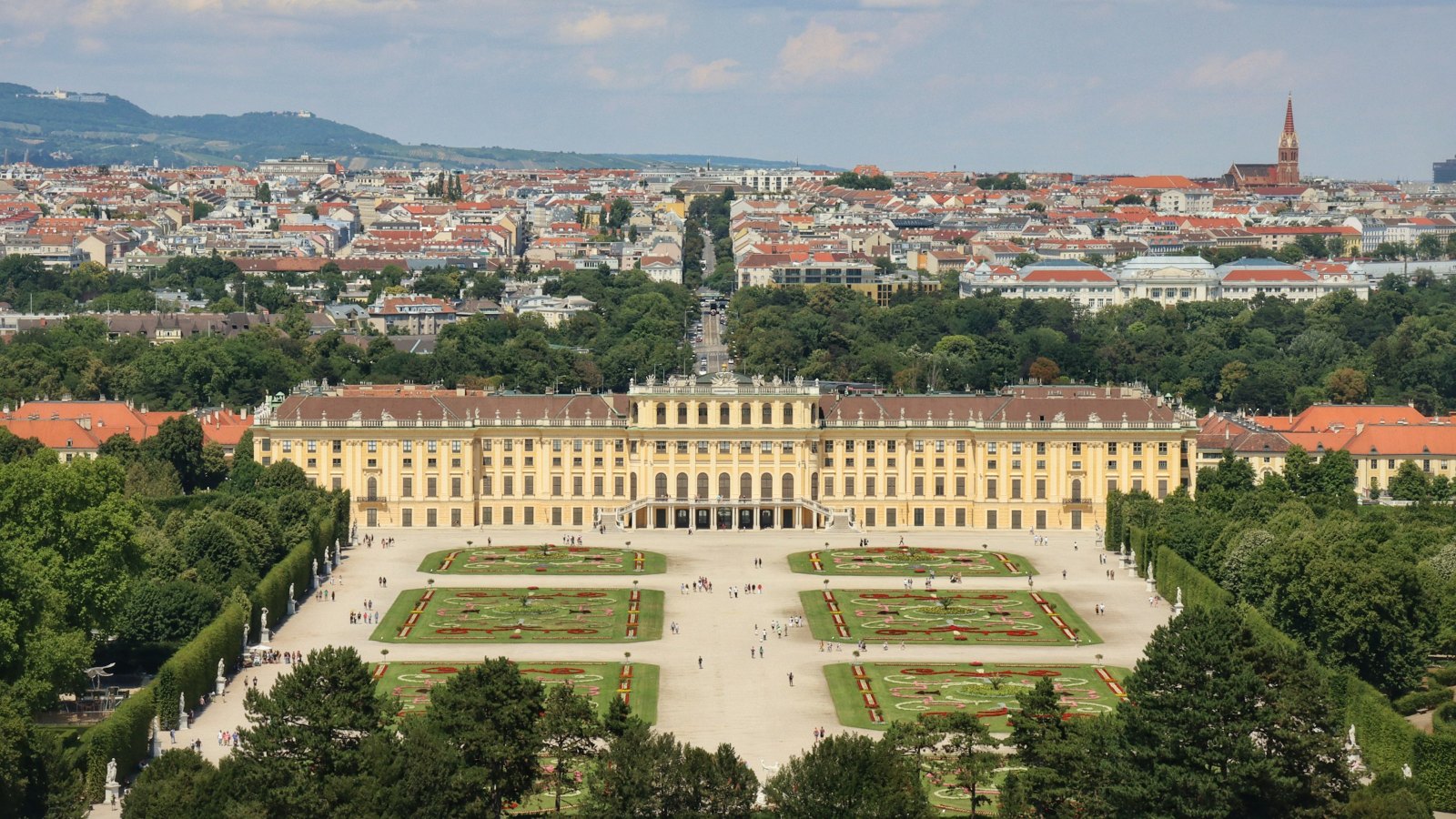
Schönbrunn Palace: the Habsburg heartland
Schönbrunn is where to start. The former summer residence of the Habsburg imperial family is one of the most important Baroque palaces in Europe and a UNESCO World Heritage Site. The palace contains 1,441 rooms, and the visitor route covers the most significant interiors, including the Great Gallery.
The palace gardens are free to enter and enormous. Allow an hour to walk the main axis to the Gloriette viewpoint, which gives a superb view back over the palace and central Vienna. Schönbrunn is on the U4 metro line, and booking tickets online helps you skip the queue, especially in summer.
The Ringstrasse: architecture on an imperial scale
The Ringstrasse boulevard was built in the second half of the 19th century as a showcase for Habsburg power. Walking or cycling its 5.3 km ring passes a sequence of monumental buildings: the Kunsthistorisches Museum, the Naturhistorisches Museum, the Parliament, the Burgtheater and the Vienna State Opera. The State Opera runs performances most evenings, and standing tickets are sold shortly before curtain at a low price.
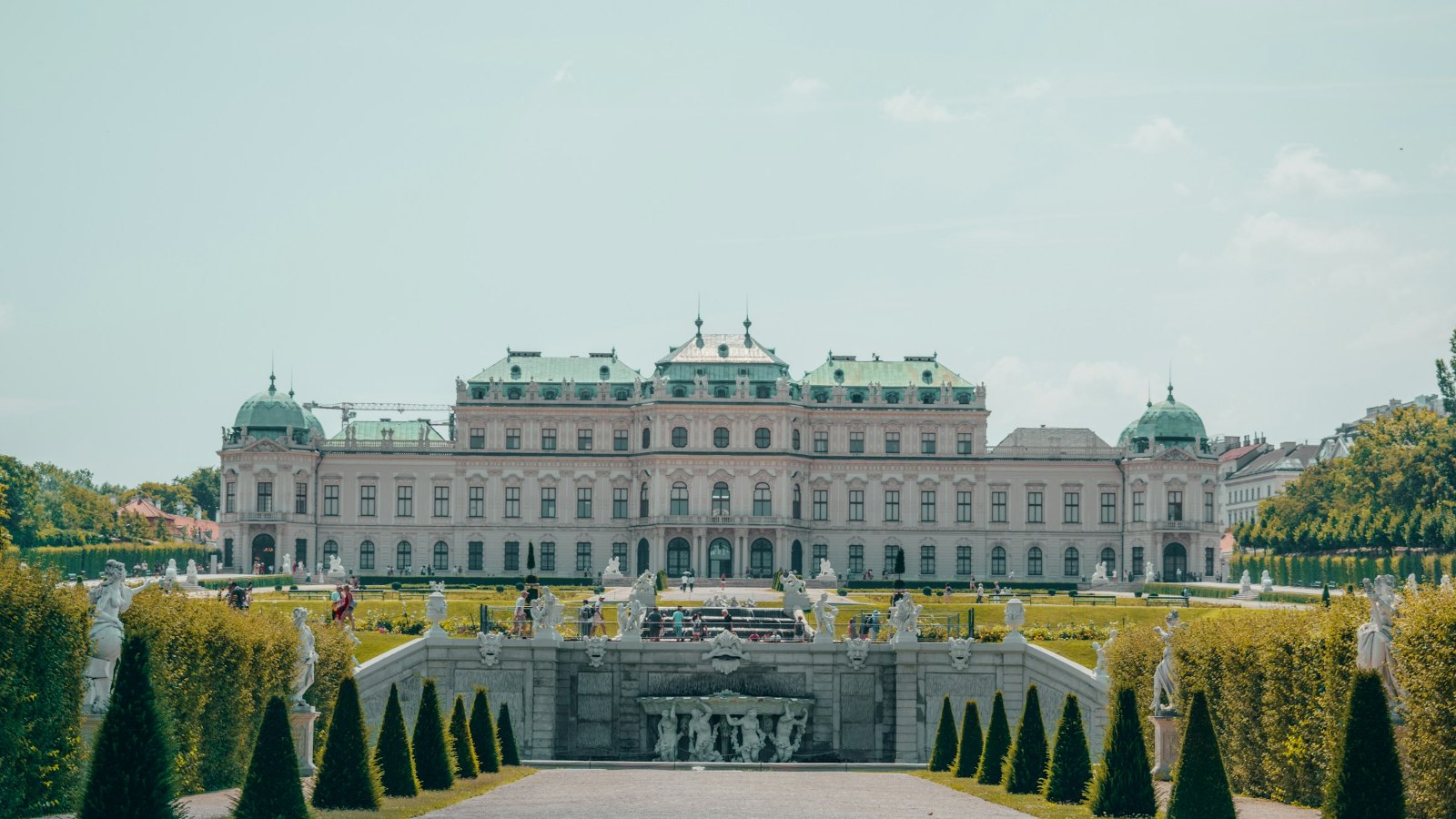
Belvedere and Klimt's The Kiss
The Upper Belvedere Palace houses the Austrian national art collection, and its most famous resident needs no introduction: Gustav Klimt's The Kiss hangs here in the original, larger and more luminous than any reproduction suggests. The palace itself, Baroque and symmetrical and reflected in the formal pool in front, is one of the finest buildings in Vienna.
The Lower Belvedere is a short walk through the gardens and contains the Orangery. Allow two to three hours for both palaces and the gardens.
What to eat and drink in Vienna
Which car to choose for the Vienna trip
Prague to Vienna is a motorway cruise, so comfort matters, especially on the return leg after a long day in the city. The Renault Austral is the ideal all-rounder: quiet at motorway speeds, fuel-efficient and automatic. The Volvo V60 adds Scandinavian refinement for a longer day behind the wheel. Groups and families will find the Renault Espace 7-seat the most comfortable shared option, and if you want something premium in front of Schönbrunn, the BMW 520 xDrive is hard to argue with. Travelling with children? Read how to choose a child car seat, and remember a child seat is free with your rental.