Prague to Pilsen road trip: the one-hour drive to the birthplace of pilsner
Pilsen, Plzeň in Czech, sits 90 km west of Prague on the D5 motorway, just over an hour's drive. It's the city that gave the world pilsner lager, with a Gothic main square, one of Europe's largest synagogues, and kilometres of medieval tunnels running beneath the streets.
If you're spending more than two days in Prague and haven't made this detour, it's the simplest day trip Bohemia has to offer.
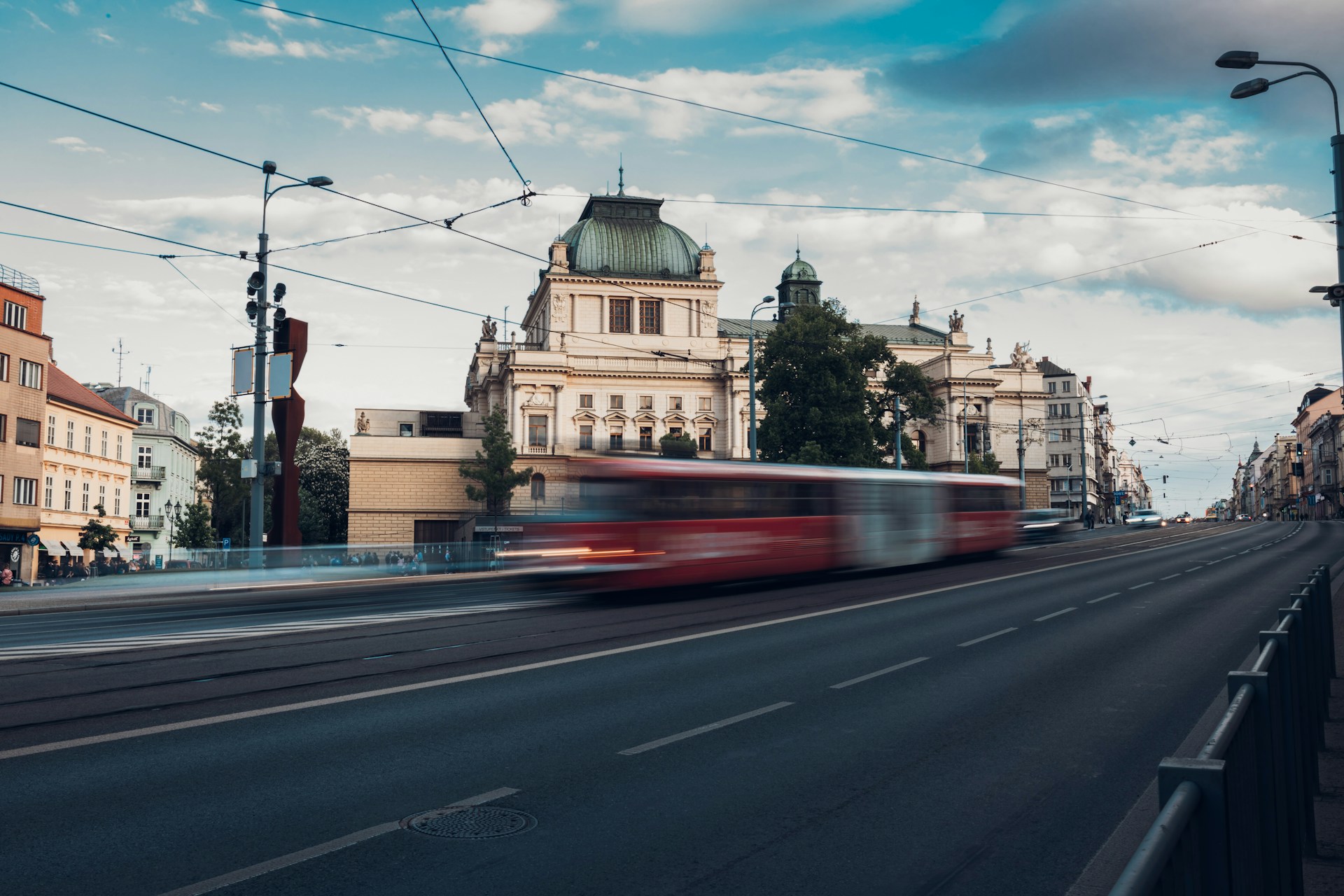
The route: Prague to Pilsen by car
The D5 is a straightforward, well-maintained motorway with none of the scenic drama of routes further north. The Bohemian landscape rolling past is pleasant but this is mostly a functional drive that gets you there quickly, so save the unhurried pace for the return leg once you know how much time you have.
The motorway continues past Pilsen to the German border near Rozvadov, meaning Nuremberg or Munich are reachable on the same road, though that's a longer trip of its own.
What to see in Pilsen
The Pilsner Urquell Brewery is the reason most people make the trip. Founded in 1842, it's where the world's first pilsner lager was brewed, the style that now accounts for most of the beer drunk anywhere. The tour walks you through the production process and into the historic underground lagering cellars cut from soft sandstone, ending with an unpasteurised, unfiltered pilsner poured straight from an oak barrel. Book online ahead of a weekend visit; tours run in several languages and the full experience takes roughly 1.5 to 2 hours. The brewery is a twenty-minute walk from the main square, with parking nearby.
Republic Square (náměstí Republiky), at around two hectares, is one of the largest historic town squares in the country. The Gothic Cathedral of St Bartholomew rises 103 metres from its centre, the tallest church spire in Bohemia, and holds a 14th-century Madonna statue considered one of the finest pieces of Gothic sculpture in Central Europe. Baroque and Renaissance buildings ring the square, worth an hour of unhurried walking.
Two blocks away, the Great Synagogue is the third largest in the world by interior volume, after Budapest and New York. Built in 1893 in Moorish-Romanesque style, its twin spires are visible across the city, and the interior, beautifully restored, tells the story of Pilsen's substantial pre-war Jewish community with real depth.
Beneath the streets, more than 800 metres of medieval tunnels built between the 13th and 18th centuries once served for storage, brewing and shelter. Guided tours run about an hour through low sandstone passages that stay around 8°C year-round, so a layer is worth bringing even in summer. Entry is from the tourist information centre on Republic Square. For a different kind of history, the small, well-curated Patton Memorial tells the story of 6 May 1945, when US forces under General Patton liberated Pilsen, the only major Czech city freed by American rather than Soviet troops.
Where to eat
Na Spilce, the beer garden and restaurant attached to the Pilsner Urquell brewery, is the obvious lunch stop straight after the tour: large portions of traditional Czech food built to go with the beer, and it gets busy right after tour groups finish, so timing your visit either side of the crowd helps.
Pivovar Groll, a small brewpub near the historic centre, brews its own beer on site in a rustic, low-key setting, a good alternative for anyone who's had enough of the main brewery's crowds and wants something quieter and more local.
For something away from the beer-focused spots, the streets around Republic Square hold a solid range of cafés and Czech kitchens serving the usual svíčková and goulash standards at prices generally a notch below central Prague.
Practical tips for the trip
Weekend and summer slots fill up, and booking online guarantees your preferred time and language rather than whatever's left when you arrive.
That puts you in Pilsen around 10:15, the brewery tour runs 11:00 to 13:00, lunch at Na Spilce follows, and the afternoon covers the square, the synagogue and one more site before the drive back by 18:00.
The sandstone passages hold a steady 8°C all year, which catches people out on a warm summer day.
It sits within easy walking distance of both the historic centre and the brewery entrance, so there's no need to move the car between the two.
The restaurant scene has more range than the tourist route suggests, and Pilsen also works as a base for the Šumava forest region further west if you want to extend the trip.
Which CarLove car for Prague–Pilsen?
The drive is short and the roads are good, so any car in the fleet handles it without effort. For a couple, the Renault Austral or Hyundai Tucson makes the trip genuinely comfortable. For a family, the Škoda Kodiaq offers a good mix of space and easy handling on Czech roads, and for a larger group the Renault Espace keeps everyone comfortable without pushing up the fuel bill.
If Pilsen is one stop on a longer western Bohemia loop, say adding the spa town of Mariánské Lázně or continuing toward the German border, one of the hybrid models makes the extended distance more efficient.